What Makes a Filament Abrasive?
Standard PLA, PETG, and ABS are relatively gentle on nozzles. Abrasive filaments contain hard particles suspended in the plastic matrix — carbon fibre strands, metal powders, wood fibres, phosphorescent crystals, or ceramic fillers. As these particles pass through the nozzle opening, they grind against the inner walls.
Brass is soft enough that this grinding changes the nozzle diameter within a single spool of abrasive filament. You may not notice immediately, but prints start showing inconsistent extrusion, poor surface finish, and incorrect dimensions.
Common Abrasive Filaments to Watch For
Not every specialty filament is abrasive, but these categories almost always require a hardened nozzle:
- Carbon fibre-filled PLA, PETG, Nylon, and PA — contains short carbon strands.
- Glow-in-the-dark PLA — phosphorescent particles are hard and gritty.
- Wood-filled PLA — wood fibres act like fine sandpaper inside the nozzle.
- Metal-filled PLA (iron, copper, brass) — metal powders erode brass quickly.
- Glass fibre and ceramic-filled composites — extremely abrasive, hardened steel essential.
- Sparkle, glitter, and stone-fill filaments — decorative particles cause gradual wear.
Signs Your Nozzle Is Worn
Nozzle wear is gradual, so it is easy to miss until print quality drops noticeably. Watch for these warning signs after printing abrasive materials on a brass nozzle:
- Inconsistent extrusion — gaps, blobs, or variable line width mid-print.
- Print dimensions drifting larger than designed (worn nozzle opens up).
- Rough top surfaces and poor bridging despite unchanged settings.
- Visible oval or enlarged nozzle opening when inspected with magnification.
- Under-extrusion that does not improve after clearing clogs.
Brass vs Hardened Steel: The Real Cost
Brass nozzles are cheap — often under ₹200 each. But if a carbon fibre spool destroys a brass nozzle in one session, the cost adds up fast. You also lose filament, print time, and model quality to failed prints caused by a worn nozzle mid-job.
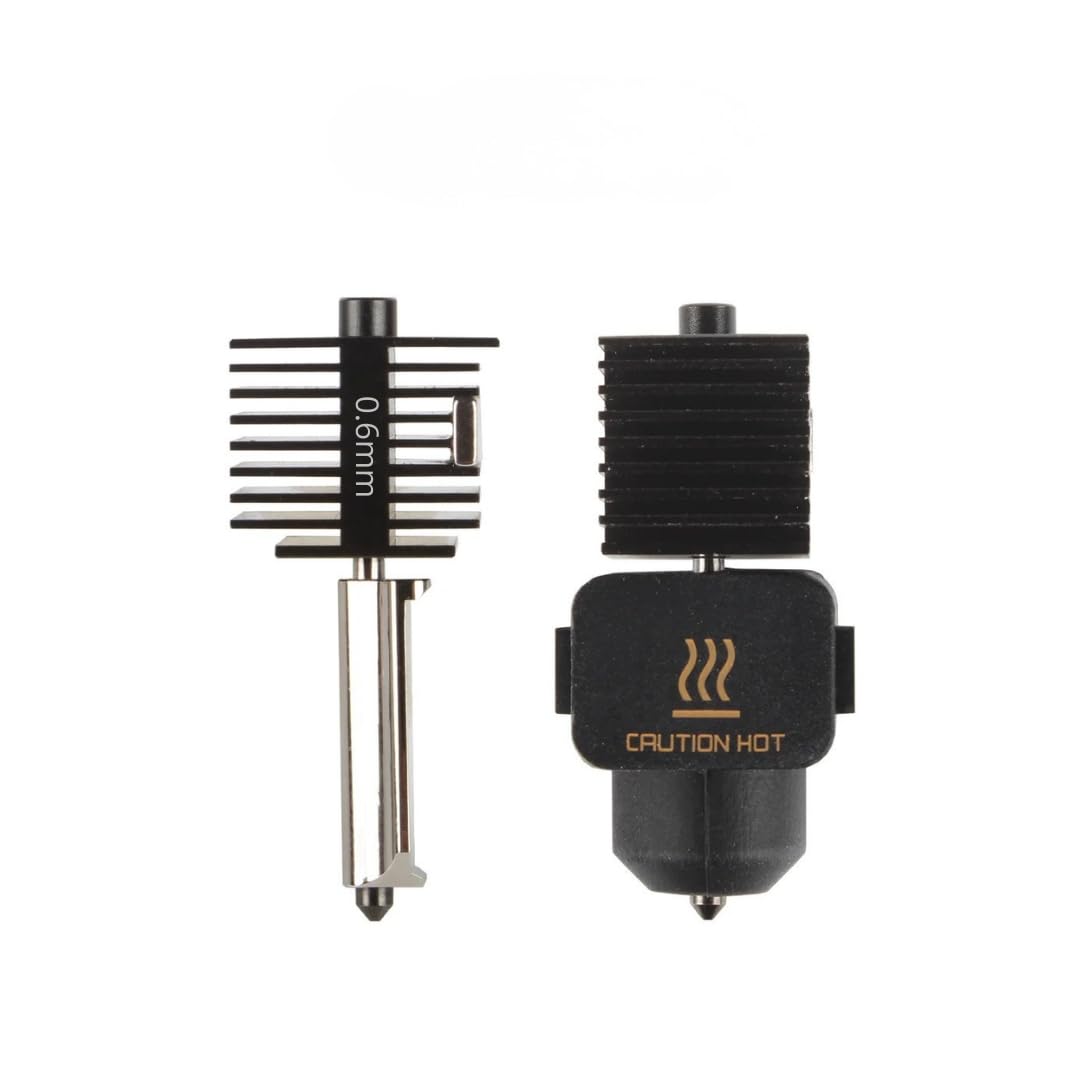
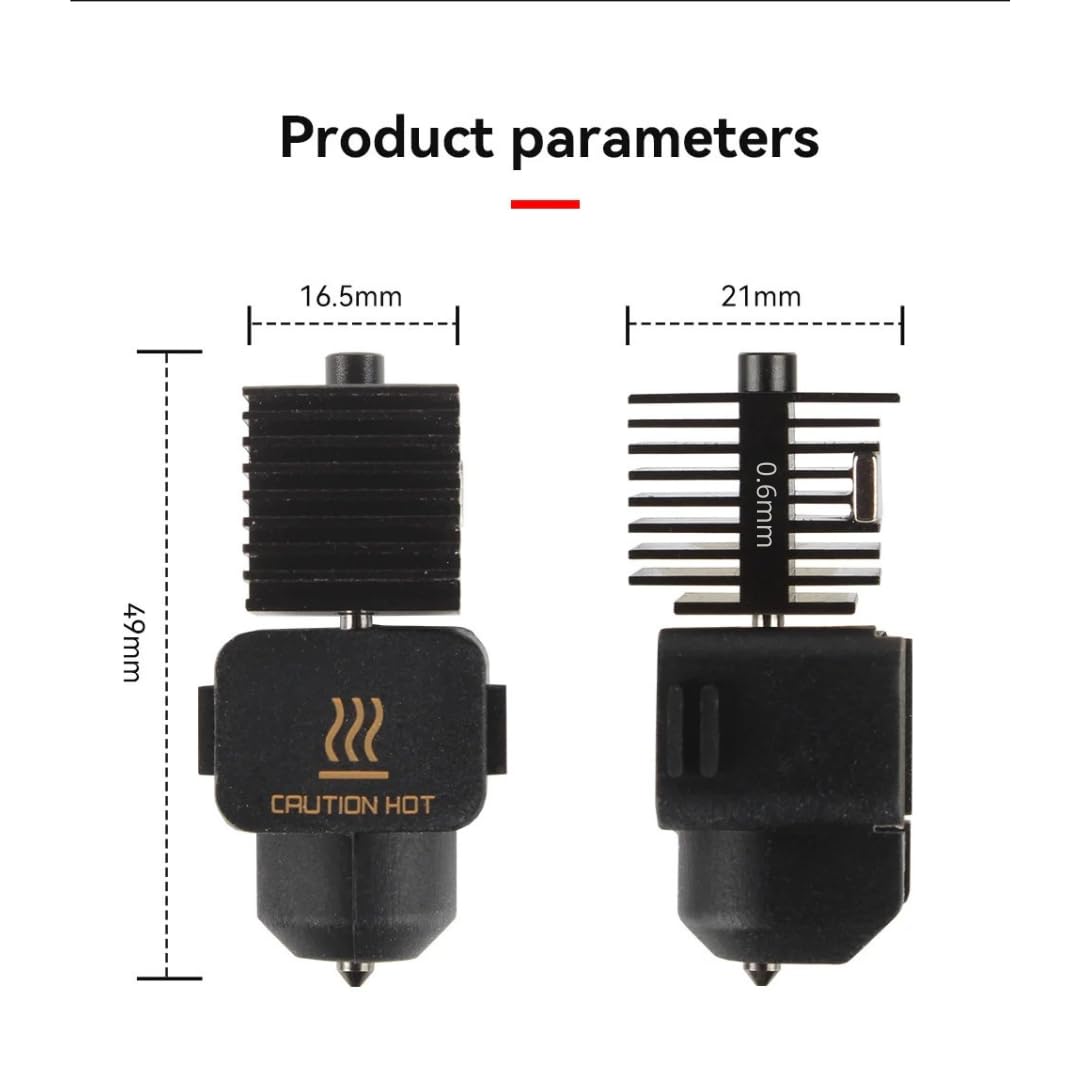
A hardened steel hotend assembly costs more upfront but lasts through kilograms of abrasive filament. For Bambu Lab A1 and A1 Mini owners, the Proevove 0.6mm hardened steel hotend includes a detachable nozzle and finned heatsink — a complete upgrade rather than swapping cheap nozzles repeatedly.
Slicer Settings for Abrasive Filaments
Abrasive filaments often need adjusted settings beyond nozzle material. Carbon fibre and glass fibre composites print at higher temperatures and may require a hardened nozzle to handle both heat and wear. Reduce retraction slightly to minimise grinding in the extruder.
With a 0.6mm hardened steel nozzle, you can use thicker layers and wider line widths — helpful because many composite filaments are used for functional, structural parts rather than fine-detail models. Always dry hygroscopic filaments like nylon and carbon fibre PETG before printing.
- Use the filament manufacturer's temperature range as a starting point.
- Reduce retraction distance slightly to limit particle grinding in the extruder.
- Print slower on the first layer for good adhesion with heavier composites.
- Dry hygroscopic filaments in a filament dryer before printing.
- Update nozzle diameter and line width in your slicer after upgrading.
Heat Creep and Long Print Sessions
Composite filaments often print at higher temperatures and for longer durations. Heat creep — where heat travels up past the heatbreak — causes soft filament to jam in the upper hotend. The Proevove hotend's finned aluminium heatsink dissipates heat effectively, keeping the thermal boundary where it belongs.
This matters especially for overnight prints with carbon fibre nylon or high-temperature composites. A hotend that manages heat well is as important as a nozzle that resists wear.
Upgrade Once, Print with Confidence
If you plan to experiment with carbon fibre, glow, wood-filled, or metal composite filaments, start with the right hardware. The Proevove hardened steel 0.6mm hotend assembly for Bambu Lab A1 and A1 Mini gives you the durability and heat management abrasive filaments demand.
Available on Amazon India. Questions about compatibility or filament choices? Message us on WhatsApp — we are here to help.