Why a Clean Nozzle Matters
The nozzle is where melted filament becomes a print. Anything that disrupts the melt — a partial clog, residue from a previous filament, or burnt plastic stuck to the tip — shows up as under-extrusion, stringing, gaps, and failed first layers.
A simple cleaning routine prevents most of these problems. You do not need to disassemble the hotend every week — three methods (cold pull, brush, and wiper) cover the vast majority of nozzle cleaning you will ever need to do.
Method 1: The Cold Pull (Best for Clogs and Color Changes)
A cold pull — also called an atomic pull or a colour change purge — clears residue from inside the nozzle and the bottom of the heatbreak. It is the most thorough cleaning method, and the one to reach for when you have a stubborn clog or are switching between very different filaments (PLA to PETG, PLA to TPU, etc.).
Heat the hotend to printing temperature for the current filament, extrude a small amount to fill the melt zone, then drop the temperature to 90 °C for PLA or 110 °C for PETG. At the lower temperature, manually pull the filament out of the extruder. The tip that comes out should be clean and tapered. Repeat once or twice if the first pull still shows residue.
- Heat to print temperature, extrude a little, then drop to 90–110 °C.
- Manually pull the filament straight down out of the extruder.
- Inspect the tip — it should be clean, tapered, and free of dark residue.
- Repeat once or twice for stubborn clogs or material changes.
Method 2: The Silicone Brush (Best for Daily Maintenance)
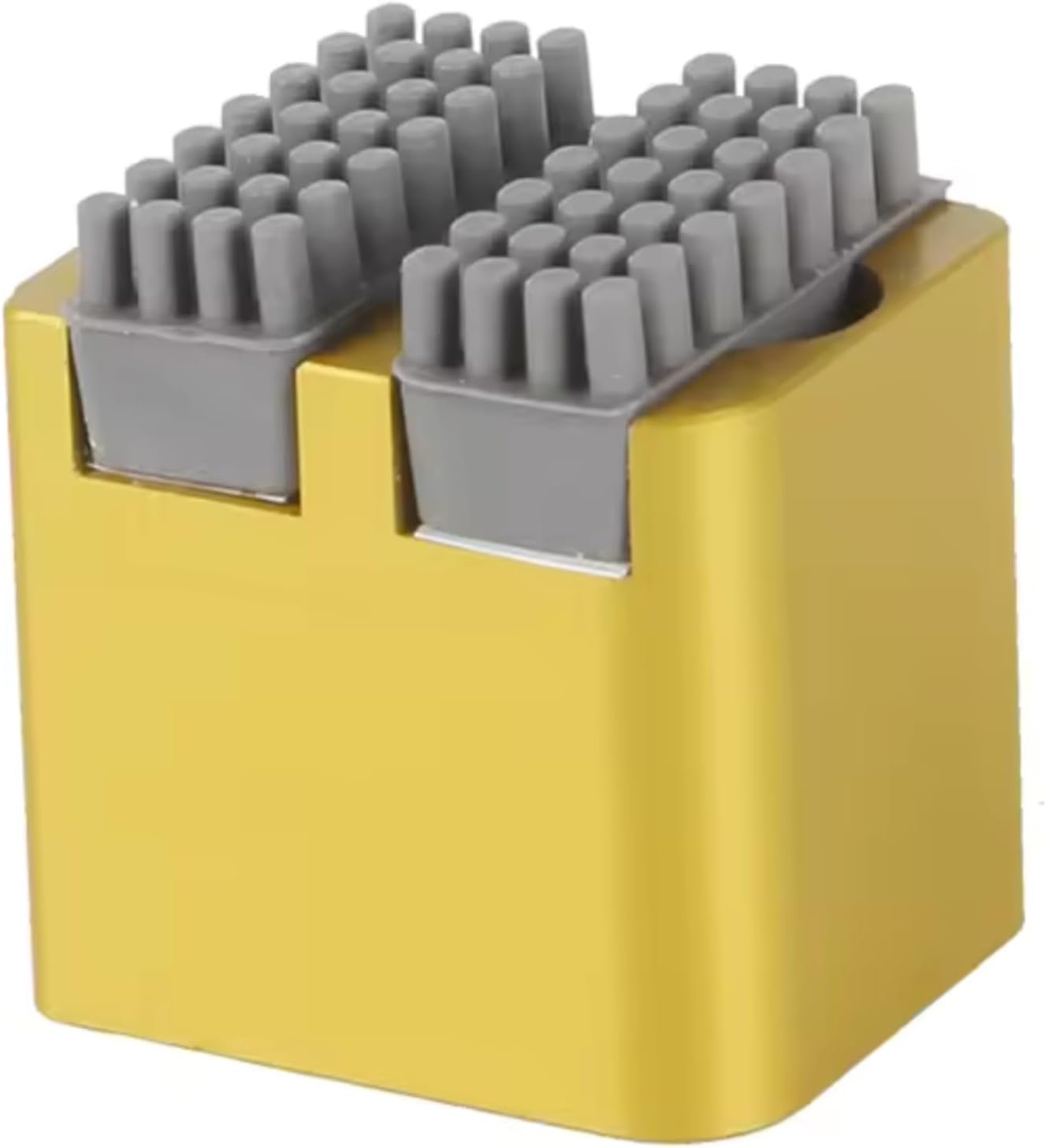
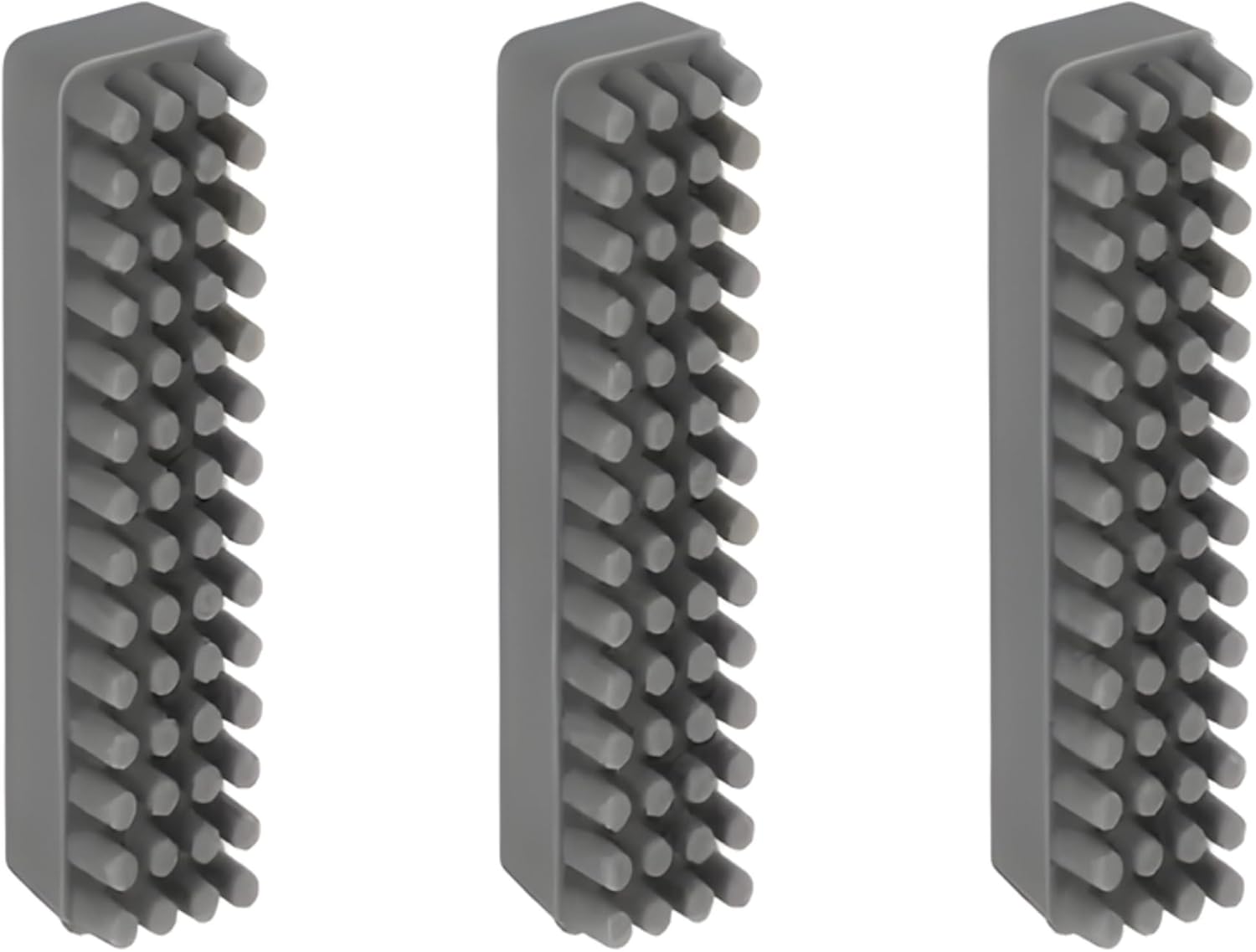
Silicone brushes sit on the build plate and wipe the nozzle tip at the start and end of every print. The Bambu Lab A1 and A1 Mini have a built-in cleaning slot on the heatbed for this purpose, and Proevove makes a pack of three silicone nozzle brushes designed to fit that slot.
The brush removes the thin layer of ooze and residue that builds up on the nozzle tip during a print. It is not a deep clean — that is what cold pulls are for — but it is the easiest way to keep the nozzle clean between jobs. A 3-pack means you always have a fresh brush ready when one wears out.
- Sits in the heatbed cleaning slot on Bambu Lab A1 and A1 Mini.
- Wipes ooze and residue off the nozzle tip at every print start and end.
- Not a deep clean — pair with cold pulls for clogs.
- Replace when the silicone starts to tear or stiffen.
Method 3: The Nozzle Wiper (Best for Mid-Print Cleaning)
A nozzle wiper is a small silicone or brush attachment that mounts on the print head and actively wipes the nozzle tip between movements. Bambu Lab X1, X1C, P1S, and P1P printers support a replaceable wiper in the tool head, and Proevove makes a direct-fit replacement wiper for those models.
Mid-print wiping is more aggressive than a heatbed brush and keeps the nozzle cleaner during long prints. If you print in materials that ooze (PETG, TPU, glow PLA), a working wiper makes a noticeable difference in surface finish and stringing.
- Mounts in the tool head and wipes the nozzle tip during printing.
- Direct-fit replacement for Bambu Lab X1, X1C, P1S, and P1P wipers.
- Especially helpful for ooze-prone materials like PETG and TPU.
- Replace when the silicone edge is worn or torn.
What You Should Never Use to Clean a Nozzle
Avoid metal tools (needles, drills, wire) inside the nozzle. They can scratch the inner bore, enlarge the opening, and permanently change extrusion behaviour. If a cold pull does not clear a clog, the issue is usually thermal — check temperature, retraction, and filament dryness before reaching for a metal pick.
Avoid abrasive cleaning on hardened steel nozzles with anything harder than the steel itself. Brass brushes are fine for brass nozzles but can be too soft for hardened steel. The Proevove silicone brushes and wipers are gentle enough for both materials.
- Never use metal tools inside the nozzle bore.
- A cold pull that does not clear a clog usually means a thermal issue.
- Brass brushes are gentle enough for brass nozzles — check compatibility for hardened steel.
- Silicone brushes and wipers work on both brass and hardened steel.
How Often Should You Clean?
Heatbed brushes and tool-head wipers run automatically on every print — no decision needed there. For cold pulls, do one whenever you change filament, especially between very different materials. For stubborn stringing or under-extrusion, a cold pull is the first thing to try before adjusting slicer settings.
If you find yourself doing cold pulls every few prints, the underlying issue is usually wet filament, bad retraction settings, or print temperature that is too low. Address the root cause, not just the symptom.
Proevove Cleaning Tools for Bambu Lab Printers
Proevove makes two cleaning tools that cover the daily-maintenance side of nozzle care: a 3-pack of silicone nozzle brushes for the Bambu Lab A1 and A1 Mini heatbed slot, and a direct-fit replacement nozzle wiper for the Bambu Lab X1, X1C, P1S, and P1P tool head.
Pair them with periodic cold pulls and you have a complete cleaning routine. Both products are available on Amazon India. Questions about which fits your printer? Message us on WhatsApp.