Two Different Mechanisms, Two Different Jobs
Most FDM 3D printers use two different motion systems at the same time. The Z-axis (and sometimes the X or Y) moves via a lead screw — a threaded rod that converts motor rotation into linear motion with high force. The X and Y axes (and the bed on some printers) glide on smooth linear rods supported by bearings or bushings.
These two mechanisms do very different jobs. A lead screw needs a thick, high-pressure grease that stays in the threads. A linear rod needs a thin, low-friction lubricant that does not attract dust. Using the wrong lubricant on either mechanism causes more problems than not lubricating at all.
Lead Screws: The Z-Axis Workhorse
Lead screws carry weight. On most FDM printers, the Z-axis lead screw lifts the entire bed or gantry against gravity, plus the weight of the print in progress. The grease on a lead screw has to handle that load, stay in place, and keep friction low across thousands of rotations.
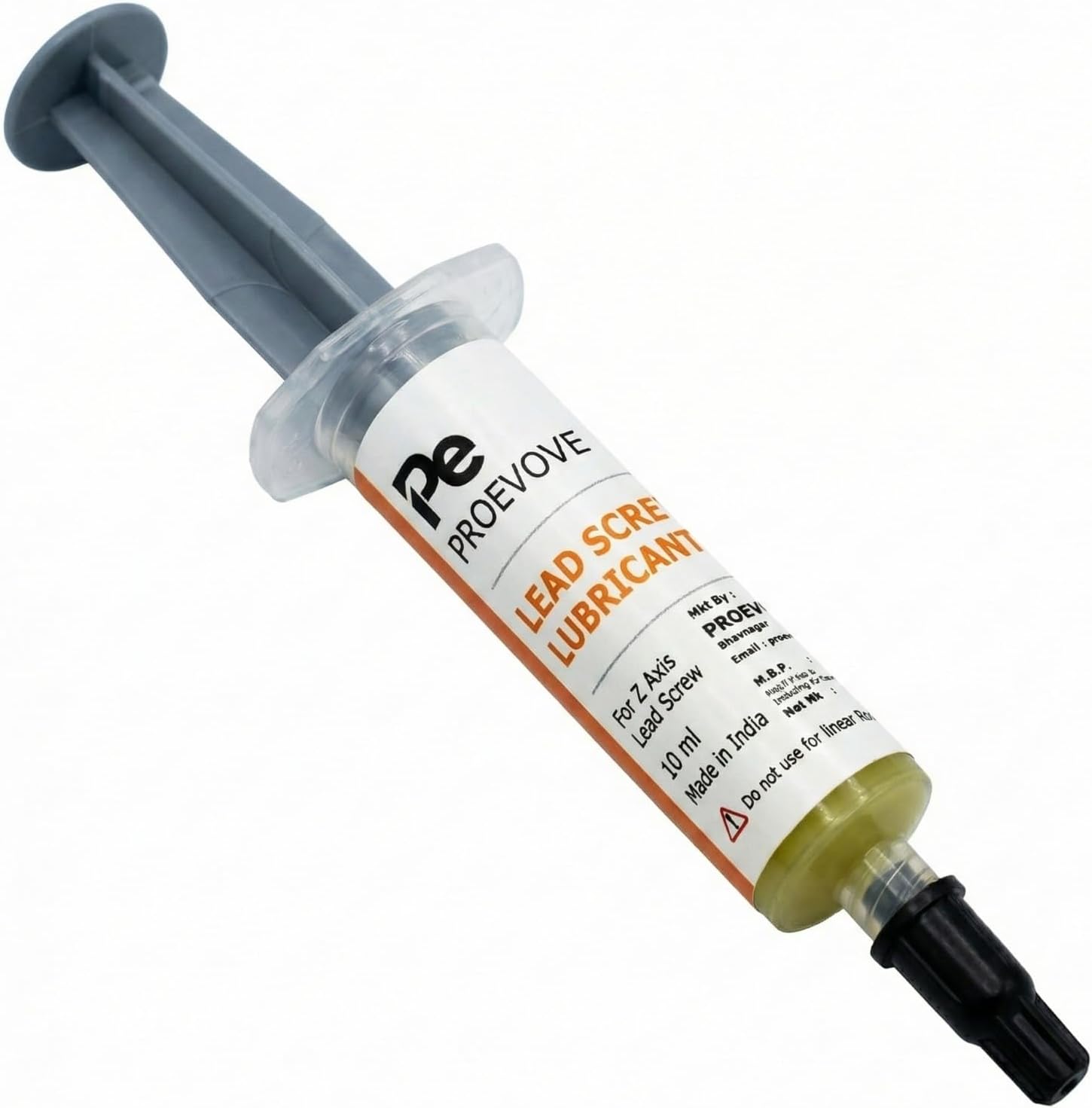
A PTFE-based lead screw grease is the right tool for the job. PTFE (polytetrafluoroethylene) has a very low coefficient of friction and handles high load. The Proevove lead screw lubricant is a PTFE grease in a 10ml syringe applicator that lets you put a thin bead right on the threads without mess.
- Carries the weight of the bed or gantry against gravity.
- Needs thick, high-pressure grease that stays in the threads.
- PTFE-based lead screw grease is the standard.
- Apply every 2–3 months, or when Z-banding appears.
Linear Rods: The X and Y Axis Glide
Linear rods are precision-ground steel shafts that bearings slide along. They handle much less load than a lead screw, but they move quickly and frequently. The lubricant on a linear rod needs to keep the surface slippery, repel dust, and stay put without thickening into a drag-inducing layer.
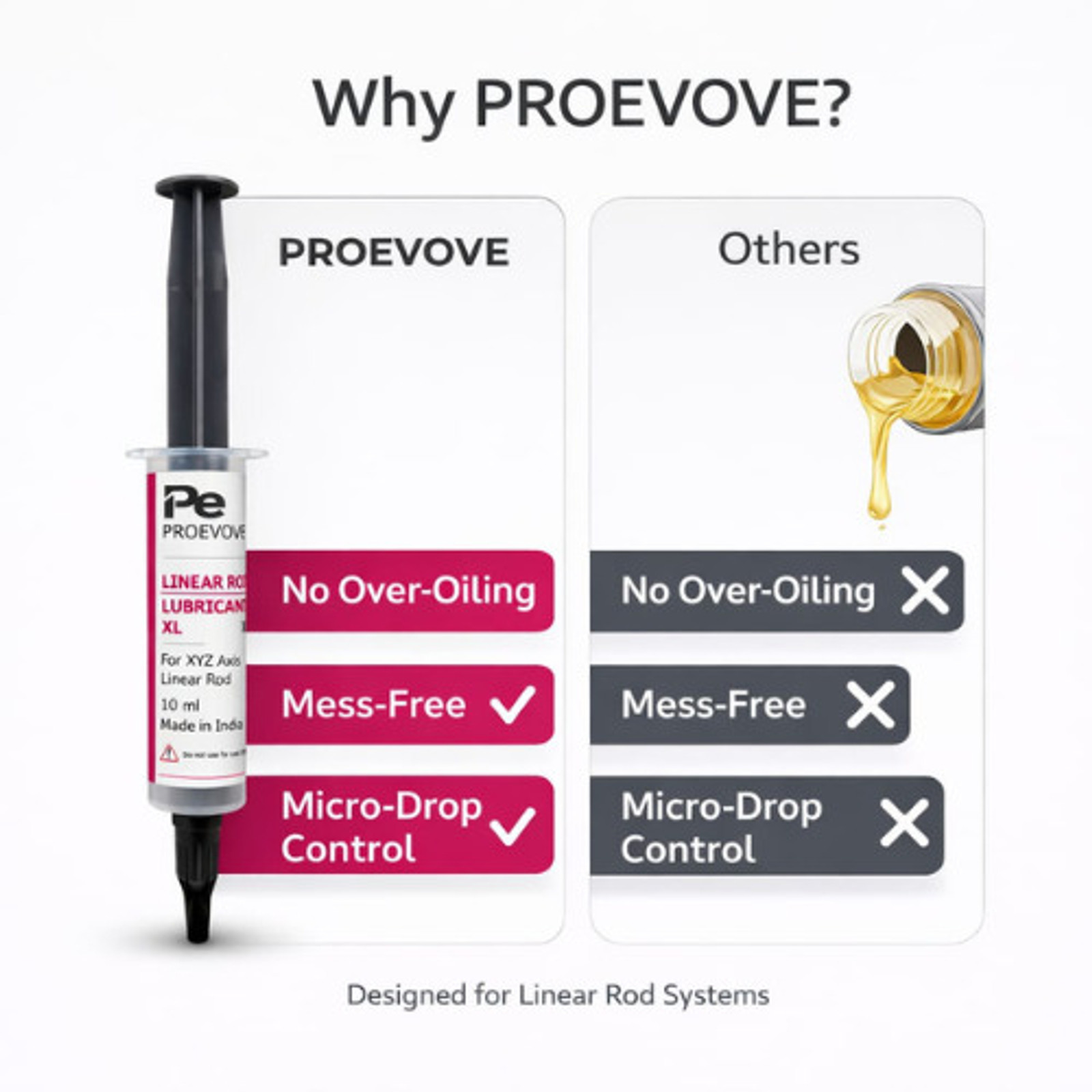
A semi-synthetic PTFE lubricant formulated for linear rods — like the Proevove linear rod lubricant — is much thinner than lead screw grease. It spreads evenly along the rod, reduces noise and binding, and does not gum up the bearings the way thick lead screw grease would.
- Smooth rods, not threaded — bearings slide along the surface.
- Need a thin, low-friction lubricant that does not attract dust.
- Thick lead screw grease will gum up the bearings.
- Apply every few months or when X/Y movement gets noisy.
Why One Lubricant Cannot Do Both Jobs
Lead screw grease is too thick for linear rods. It sticks to the rod, attracts dust, and increases friction in the bearings — the opposite of what you want on a fast-moving X or Y axis. Conversely, thin linear rod lubricant is too runny for a lead screw: it runs off the threads, leaves the screw dry, and accelerates wear.
The Proevove lead screw lubricant and the Proevove linear rod lubricant are formulated for their specific jobs. Lead screw grease is PTFE-thick for thread adhesion and load capacity. Linear rod lubricant is a Technosynthese semi-synthetic with PTFE for thin, even coverage and low drag on smooth rods. Use each on its intended part.
How to Tell Which Part You Have
Lead screws are threaded — you can see the spiral groove running along the rod. They are usually T5, T8, or trapezoidal pitch, and the rods are often silver, brass, or steel-coloured.
Linear rods are smooth, polished, and shiny. They are typically 8mm or 10mm in diameter and run between LM8UU or LM10UU bearings. If the rod looks like a chromed pole with no threads, it is a linear rod.
- Threaded rod with a visible spiral = lead screw.
- Smooth, polished rod between bearings = linear rod.
- Bambu Lab A1 and A1 Mini use lead screws on the Z-axis.
- Most modern Creality, Prusa, and Voron printers use both mechanisms.
Maintenance Schedule: Lead Screws vs Linear Rods
A simple schedule keeps both mechanisms in good shape. For lead screws, apply Proevove lead screw lubricant every 2–3 months, or whenever you notice Z-banding or rough Z movement. For linear rods, apply Proevove linear rod lubricant every 3–4 months, or whenever X or Y movement gets noisy or gritty.
Both products come in 10ml syringes that last many applications. The Proevove pack-of-3 option is good value if you maintain multiple printers or print daily.
- Lead screw: lubricate every 2–3 months.
- Linear rod: lubricate every 3–4 months or when noise increases.
- Both come in 10ml syringes — a little goes a long way.
- Clean the part with a dry cloth before reapplying fresh lubricant.
Proevove Lubricants for Each Axis
The Proevove lead screw lubricant is a PTFE grease in a 10ml syringe, formulated for trapezoidal Z-axis lead screws. The Proevove linear rod lubricant is a PTFE-based Technosynthese semi-synthetic in a 10ml syringe, formulated exclusively for smooth linear rods. Use each on its intended part and your printer will run quieter and print cleaner.
Both products are made in India by Proevove and available on Amazon India. If you are not sure which part of your printer needs which lubricant, message us on WhatsApp with your printer model — we will point you to the right product.