What Is a 3D Printer Silicone Sock?
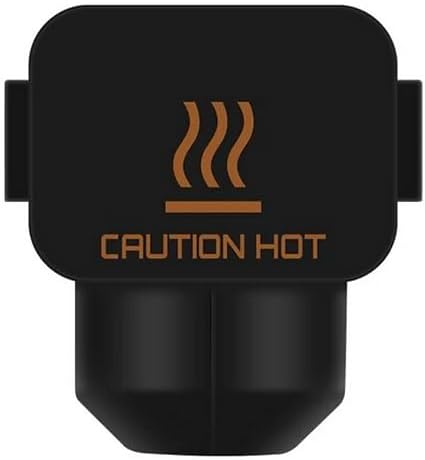
A silicone sock is a small, heat-resistant silicone cover that slips over the heater block of your 3D printer's hotend. It surrounds the metal block where the nozzle screws in, shielding it from filament residue, soot, and stray plastic during printing.
Socks are made from high-temperature silicone that can handle continuous exposure to 200 °C+ without degrading. They are a consumable — they tear, scorch, and wear out — but they cost very little and can be swapped in seconds without tools.
What Problems Does a Silicone Sock Actually Prevent?
Three problems, in order of how often they bite FDM users: filament residue buildup on the heater block, heat creep into the cold side of the hotend, and stringing caused by stray plastic sticking to a hot, exposed block.
Residue buildup is the most visible issue. Over time, oozed filament bakes onto a bare heater block, eventually flaking off and getting dragged across your print. A sock catches that residue, and when the sock gets grimy you swap it for a fresh one in seconds.
- Catches filament residue and soot before it builds up on the block.
- Mildly insulates the block from cold-air drafts (reduces heat creep).
- Keeps stray ooze from sticking to the bare metal block.
- Cheap insurance against the most common hotend maintenance issues.
Signs Your Silicone Sock Needs Replacing
Visible tears, holes, or burns on the silicone surface are the obvious signs. The sock has done its job and caught enough residue that it is no longer sealing properly. Replace it.
More subtle signs: increased stringing on PLA, a faint smell of burnt plastic at the start of a print, or visible ooze sticking to the heater block instead of staying on the sock. If you see any of these and the sock looks worn, swap it before it causes a clogged nozzle or a failed print.
- Visible tears, holes, or burns.
- Persistent stringing even with good slicer settings.
- Burnt plastic smell at the start of a print.
- Residue visible on the heater block instead of the sock.
Choosing the Right Sock for Your Bambu Lab Printer
Socks are not universal — the A1 and A1 Mini have a different hotend geometry than the X1, P1S, and P1P, and the H2D family has its own slim-fit shape. Buying the wrong sock means it will not sit properly and will not protect the block.
Proevove makes socks in three Bambu Lab fitments: the A1 / A1 Mini slim-fit sock, the H2D / A1 / A1 Mini shared-fit sock, and the X1 / P1P / P1S sock. Each is heat-resistant silicone, easy to slip on while the block is warm, and built to last through many print sessions.
How to Install a Silicone Sock
Heat the hotend to about 200 °C (or work on a warm block shortly after a print). Slip the sock over the nozzle and push it up over the heater block until it seats. The sock should cover the block completely with no exposed metal.
That is it — no tools, no disassembly. The sock holds itself in place by friction. Let the hotend cool before printing, and check after the first few layers that the sock has not shifted.
- Heat the hotend to ~200 °C or work on a warm block.
- Slip the sock over the nozzle and push up over the heater block.
- Make sure no metal is exposed at the top or bottom of the block.
- Check the sock is seated correctly after the first few layers.
How Often Should You Replace It?
For everyday PLA and PETG printing, a Proevove silicone sock lasts several months of regular use. Abrasive filaments, high-temperature materials, and frequent long prints shorten the lifespan — check the sock monthly if you print often.
Keep a spare sock on hand so a tear never costs you a print. The socks are inexpensive and small, and swapping one takes less time than cleaning a residue-caked heater block.
Proevove Silicone Socks for Every Bambu Lab Series
Proevove makes high-temperature silicone socks for the Bambu Lab A1, A1 Mini, H2D, X1, P1P, and P1S. All are made from durable, heat-resistant silicone and designed for a clean, snug fit on the matching hotend geometry.
Not sure which sock fits your printer? Reach out on WhatsApp or call us — we will point you to the right part for your specific model.